
Professional Vehicle Graphics and Wraps Design Tips
Michael Martin
Vehicle Wraps
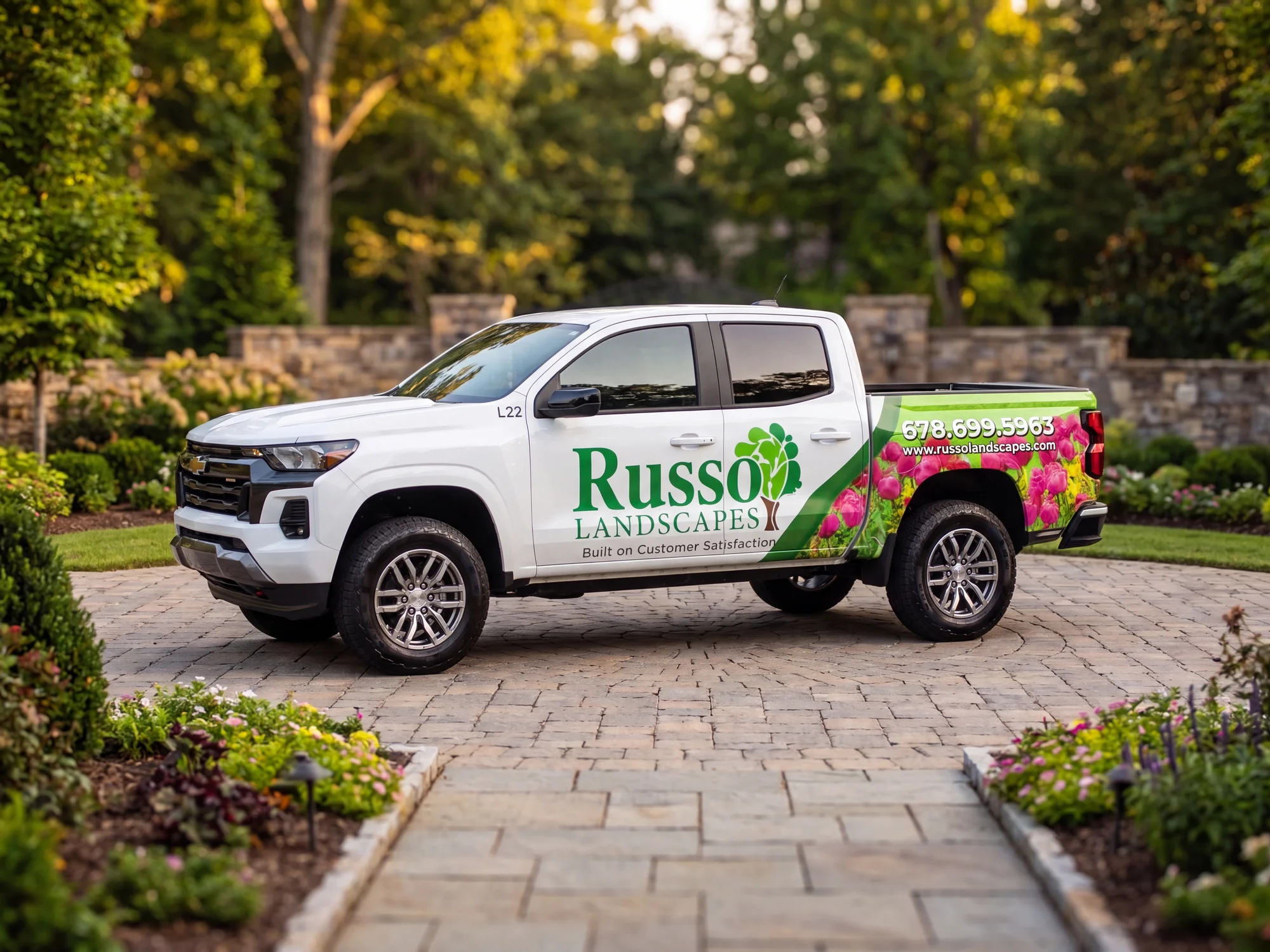
When someone sees your vehicle in traffic, how long do they actually look at it?
In most cases, I believe you only have three to five seconds to make an impression before the opportunity is lost.
If your wrap does not clearly communicate who you are, what you do, and how to reach you in that tiny window, it is not a marketing tool; it is just an expensive decoration.
Before we talk about the design itself, we have to define what the design is actually trying to achieve. In a local market, a commercial vehicle wrap with the intent of attracting customers has two distinct jobs.
Strategy
The two goals of a local vehicle wrap
- 1. Generate immediate leads. This happens when someone sees your vehicle and has an immediate need for your service. To capture this lead, your truck has to be impossible to misunderstand. The viewer needs to instantly recognize what you do, and they need to be able to easily remember your phone number, website, or company name. If they have the opportunity, they might take a picture or scan a QR code. This is direct-response marketing on wheels.
- 2. Build long-term brand awareness and trust. The second objective is playing the long game. Even if someone does not need your service today, seeing your brightly wrapped van around town repeatedly builds passive trust. When a need for your service arises and they go searching online, your company will stand out as the safe, established option simply because they recognize your brand. For this to work, your entire fleet must be consistent. Your vehicles need to match your building signs, your website, and any other advertising you do. Consistency is what turns a passing glance into long-term brand equity.
To accomplish both of these goals at the same time, your design has to follow a strict set of rules.
Most first-time buyers want their company logo to be the absolute largest element on the van, but that is usually a mistake.
Most people probably won't remember your logo well enough to draw it five minutes after they saw your vehicle drive by. They remember that they saw a plumbing truck, and they might remember the name of your business if it's a memorable name. But before someone even cares about the name of your business or your phone number, they need to understand what you do and why it matters to them. That might mean your primary product, service, or tagline needs to be large and easy to read at a distance.
Hierarchy
The hierarchy of a lead-generating wrap
- First: What you do. "HEATING & COOLING" or "RESIDENTIAL PLUMBING." This must be the largest text on the vehicle. It needs to be readable from thirty feet away. Your logo is just an icon; the service description is what actually connects with a potential customer's immediate need.
- Second: Why it matters. Knowing what you do is good, but great marketing tells the customer why it matters to them. People are just trying to survive and thrive. You need to make your service real for them by connecting it to a problem they care about. For example, an HVAC van might show an image of someone sweating next to a broken air conditioning unit in the hot sun, paired with a tagline like, "Keep your cool. Call ACME HVAC." Anyone can imagine being miserable in the heat, and now they associate that relief directly with your company.
- Third: Who you are. Your company name and logo should be clean and professional, but they remain secondary to the service description and the problem you solve.
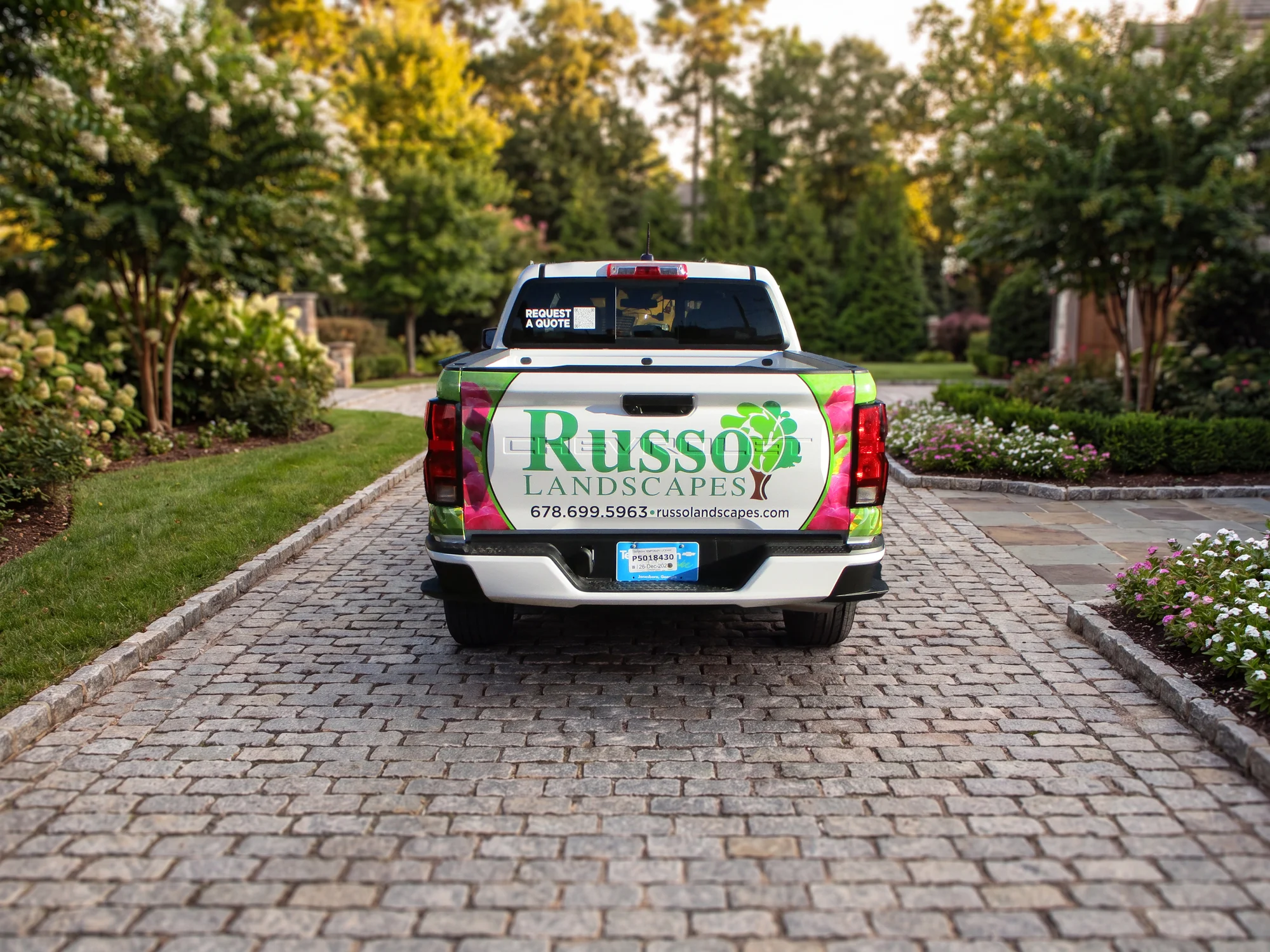
- Fourth: How to reach you. Your phone number and website must also be easy to read, especially on the tailgate. Numbers should be formatted with dashes or dots so the human brain can process them instantly at speed. These days, it is rare for anyone to memorize phone numbers, but they will take a picture. Adding a QR code can be helpful, offering a simpler way for them to access your website.
- Fifth: Build trust. License numbers, "Fully Insured," and "Family Owned Since 1985" badges build trust, but they should be small. They confirm credibility for someone who is already looking; they do not grab attention on their own.
Street-level design
Designing for the street, not the screen
I have watched award-winning, highly creative wrap designs completely fail to generate a single phone call.
A common failure occurs when a designer gets too clever with the vehicle's geometry. They might angle the text to follow a sweeping body line or a crease in the door panel because it looks dynamic on a 2D computer template.
But in traffic, a driver does not care about your van's body lines; they are trying to read your phone number. If the text is slanted, wrapped around a corner, or distorted by a door handle, the brain simply gives up and looks away.
"It needs to be prominent. Easy to read. And instantaneous recognition of exactly what you do and how to get in touch with you."
We design for the street. Every critical piece of information must sit perfectly level to the viewer's eye.
Clarity
The danger of visual clutter
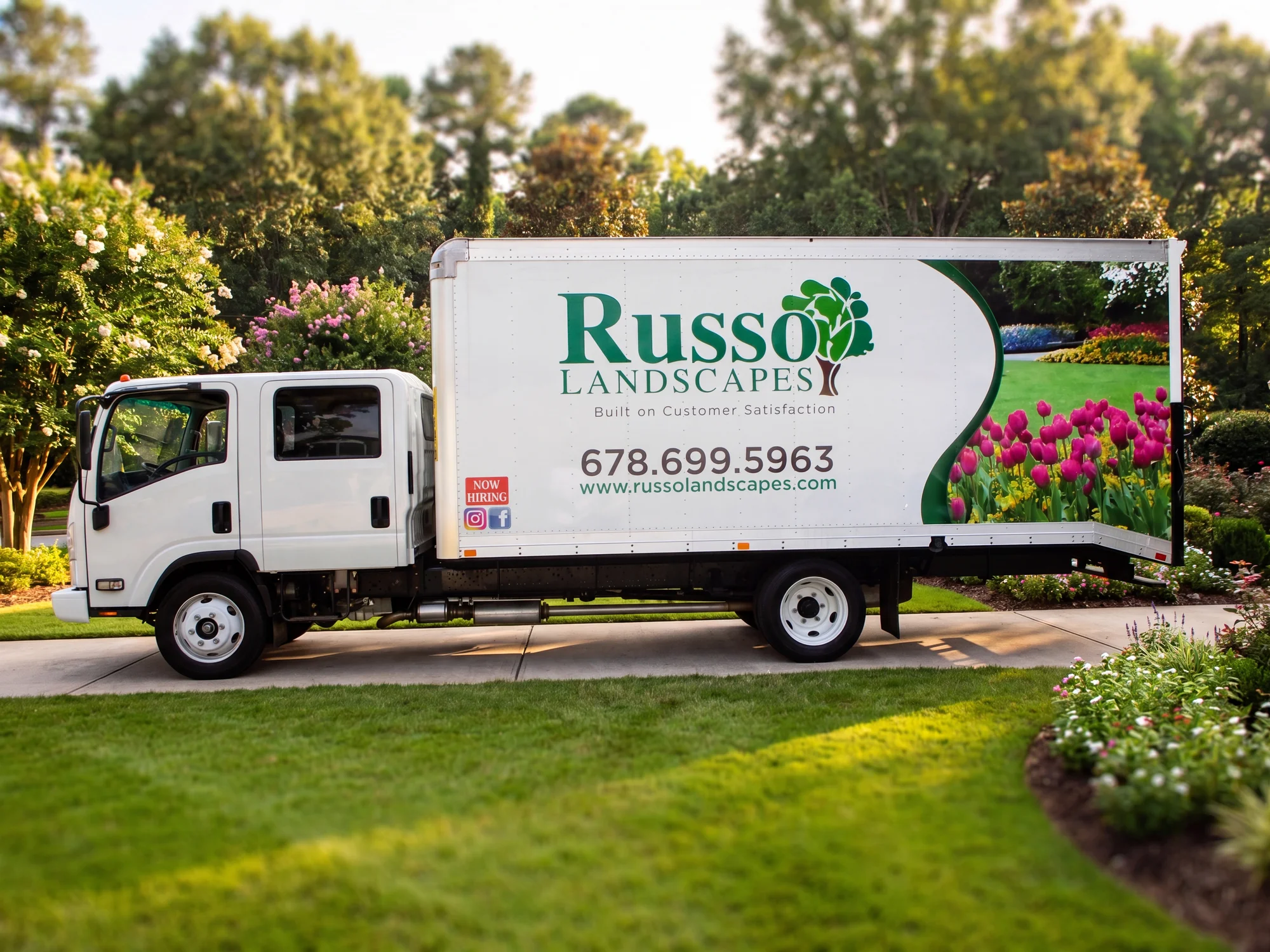
The fastest way to ruin a wrap is to list every single service you offer.
If you list every product or service on your door, you have created visual noise. Given only five seconds of exposure, no one is reading a menu.
When you clutter the design with too much text, you are forced to shrink the font size of your phone number to make it all fit. A beautiful wrap with a tiny phone number is worse than having no wrap at all. It frustrates the exact customer who is trying to hire you.
Pick the most important information that someone needs to know at a glance and put the rest on your website.
Proof check
The squint test
Before we ever send a proof to a customer, we run it through a simple "pressure test" in the shop.
We pull the design up on the screen, step ten feet back, and squint. When the image goes blurry, the small details vanish. If the service description and the phone number are still obvious, the design works. If the logo is the only thing left visible, the hierarchy is broken.
This mimics exactly what happens in traffic. The human eye grabs high-contrast, massive shapes and ignores the rest.
If you want your vehicle to drive the most leads, make it impossible to misunderstand.
For coverage and pricing decisions that go with this design approach, see our guides on partial wraps, partial vs. full wraps, and vehicle wrap cost in Marietta.
Ready to design a wrap that instantly attracts high-quality customers?
Get a free vehicle wrap quote today.
Call us today770-591-1111